At a glance 14 flags across Southern Cross and Pacific blue families
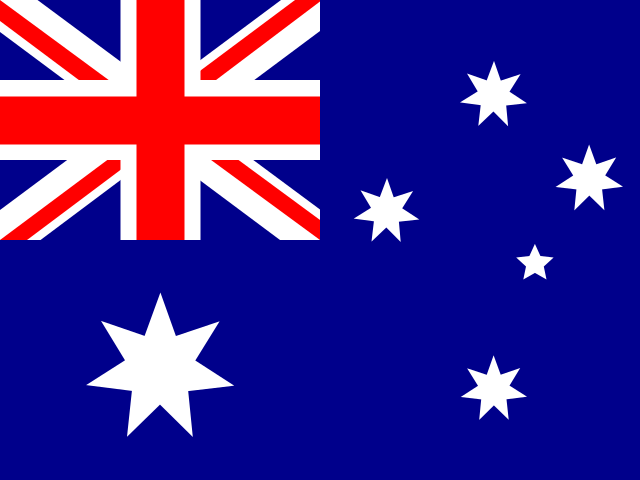
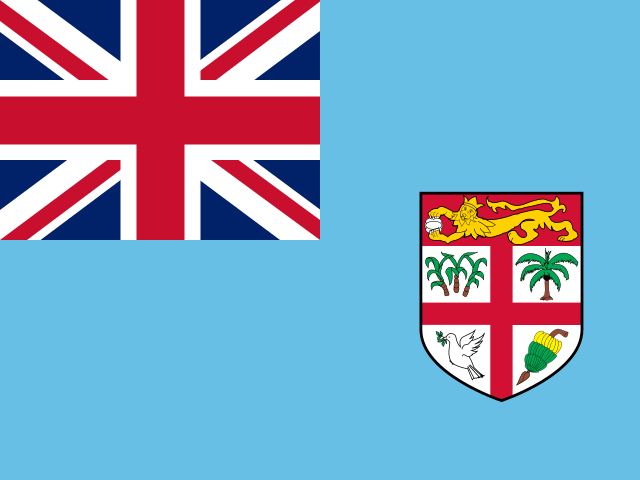
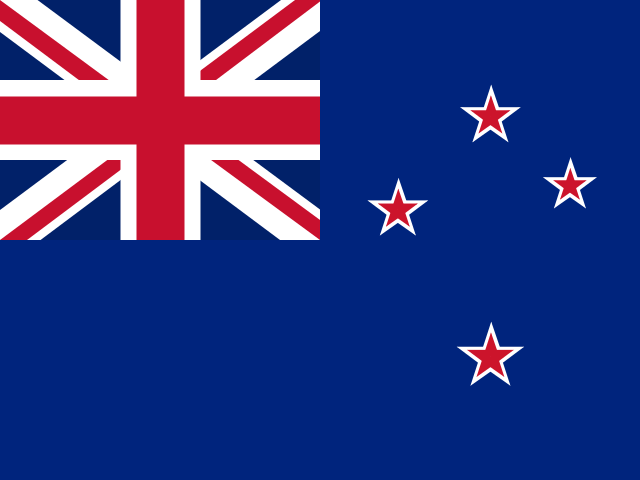
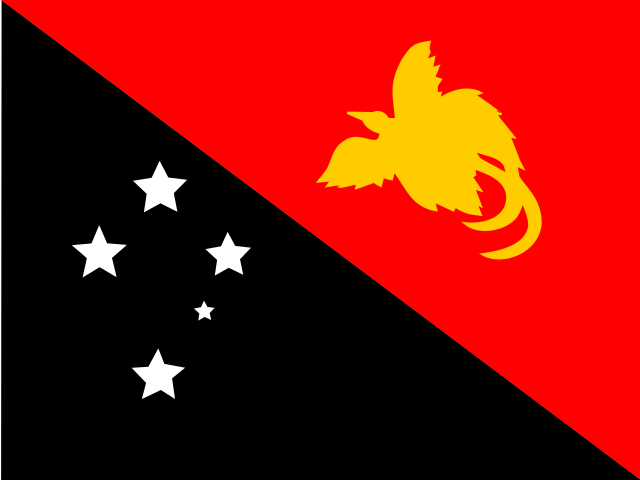
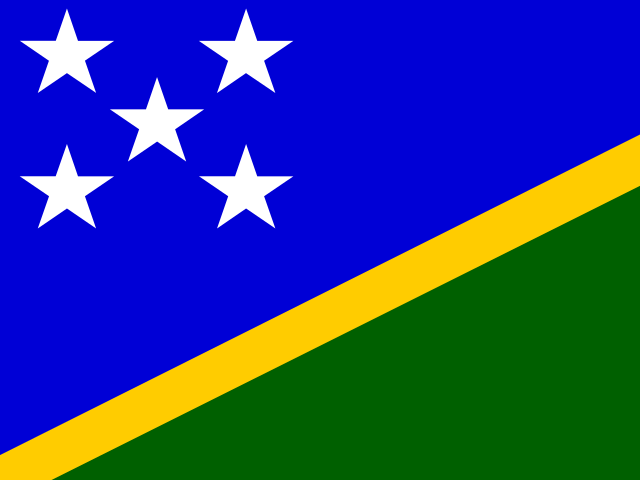
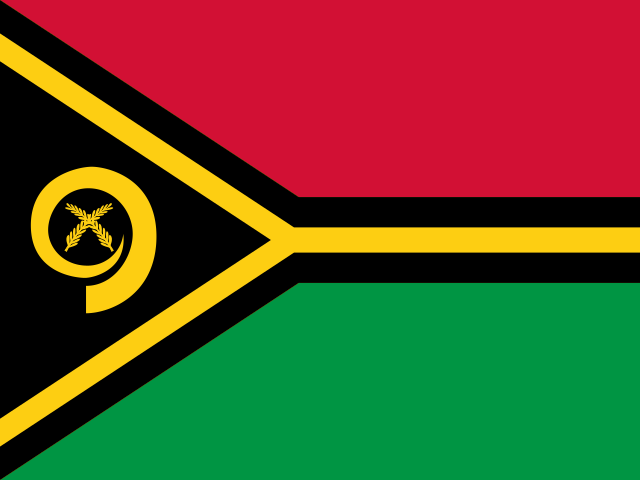
Pacific blue dominates flags such as Palau, Micronesia, Marshall Islands, Nauru, Kiribati, and Tuvalu, where the color usually points to ocean, sky, or island position. The Union Jack canton appears on Australia, New Zealand, Fiji, and Tuvalu, a British colonial legacy. Symbol-led flags include Papua New Guinea's bird of paradise, Kiribati's frigate bird and rising sun, Vanuatu's boar tusk, Solomon Islands's five stars, and Nauru's equator stripe. The tightest near-miss is Australia vs. New Zealand: both have blue fields and Union Jack cantons, but the stars differ in number and color.
Who plays it For classrooms, homeschoolers, and culture students
Teachers and homeschool families use Oceanian flags for Pacific studies, Commonwealth history, social studies, climate geography, and heritage or culture units because designs make island identity concrete. Students use the page for Geography Bee, Model UN, AP Human Geography, and continent review. Sports fans preparing for Rugby World Cup matches, Pacific Games, Olympic ceremonies, and vexillology practice fit naturally here too.
How to learn Sort by color family, then drill look-alikes
Sort into families first. Start with the Pacific blue cluster and drill Palau, Micronesia, Marshall Islands, Nauru, and Kiribati by moon, stars, rays, stripes, and waves. The Union Jack canton group, Australia, New Zealand, Fiji, and Tuvalu, forms a neat second bundle because the upper-left corner repeats while the fly side changes. Symbol flags give satisfying wins: Papua New Guinea, Kiribati, Vanuatu, and Solomon Islands. Finish with confusion-pair drills: Australia has six white stars including the large Commonwealth Star, while New Zealand has four red stars with white borders; Fiji is pale blue, while Tuvalu adds nine yellow stars.