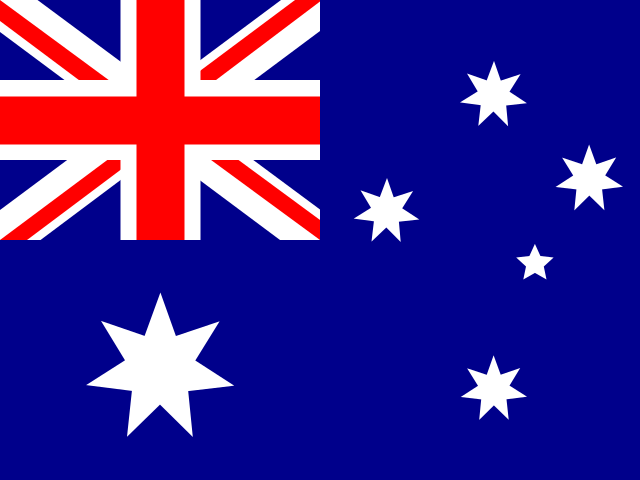
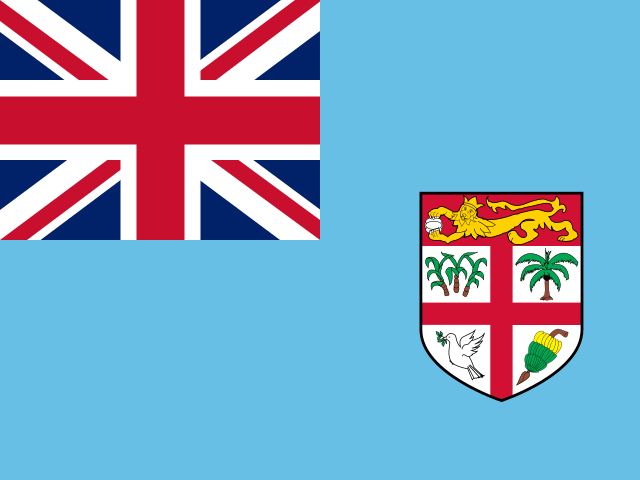
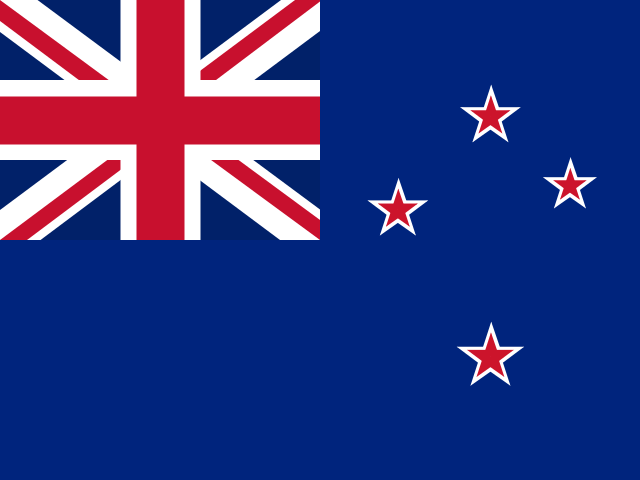
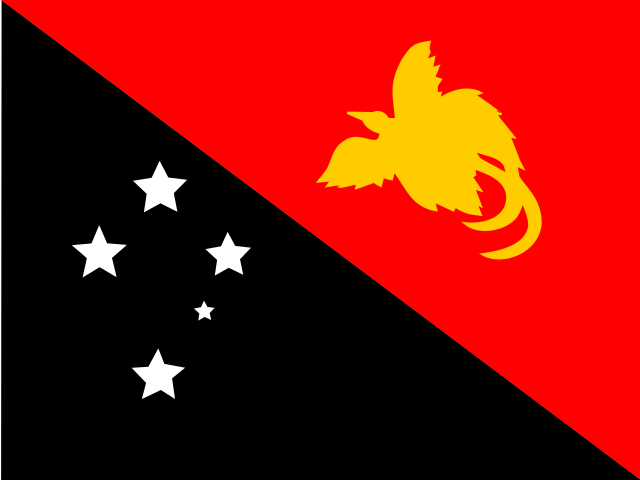
At a glance 14 countries across 4 Pacific regions
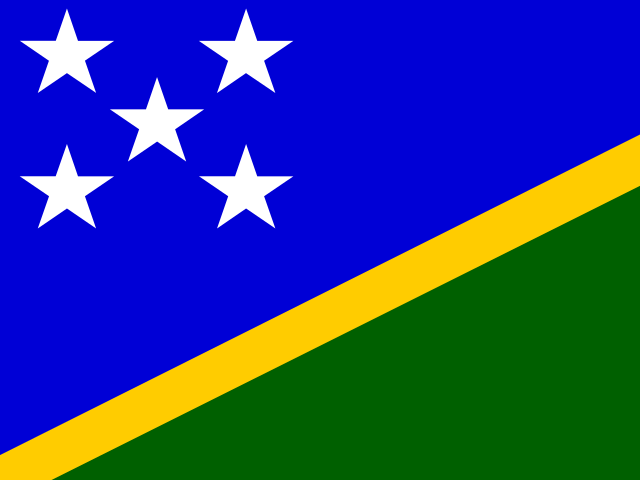
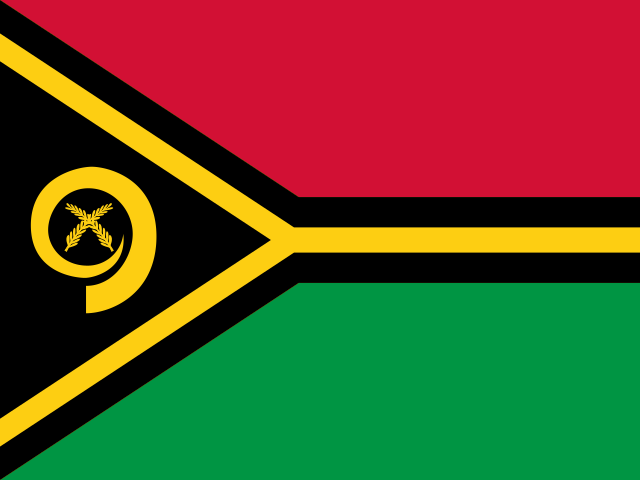
Oceania's 14 sovereign countries fit a useful practice grid: Australasia has 2, Melanesia has 4, Micronesia has 5, and Polynesia has 3. Palau became independent in 1994, the most recent independence date in this set, while Tuvalu became the newest United Nations member among these countries in 2000. The classic mix-ups are Micronesia the country vs. Micronesia the region, Samoa vs. American Samoa, and Solomon Islands vs. Vanuatu along the Melanesian island arc.
Who plays it Built for classrooms, homeschoolers, and students
Teachers and homeschool families use this Oceanian countries page for grades 4-10 social studies, world geography, Pacific studies, climate units, and AP Human Geography review. Middle school, high school, and college students use it for Geography Bee prep, Model UN, Pacific Islands Forum simulations, and exam review. Adults studying for civil-service exams, heritage learning, rugby travel, or multi-country Pacific itineraries can use it after the classroom path is covered.
How to learn Start with anchors, then trace island arcs
Begin with familiar anchors: Australia, New Zealand, Papua New Guinea, Fiji, Samoa, and Tonga. From there, picture Melanesia as a stepping-stone arc from Papua New Guinea toward Fiji, with Solomon Islands and Vanuatu filling the middle. The hardest stall usually comes in Micronesia, where Micronesia, Marshall Islands, Palau, Kiribati, and Nauru sit far apart and share small-island cues. Treat that set as a northern necklace, then add the Polynesian trio farther east. Stay in Spotter mode until you are hitting roughly 90% in a region, then graduate to Seeker.