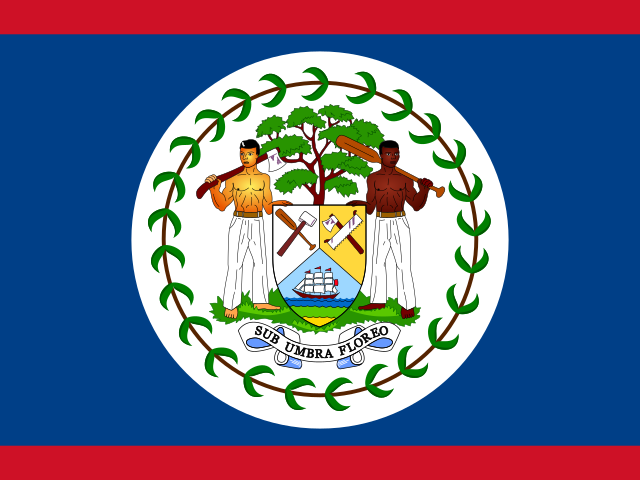
At a glance 23 flags across blue-white-blue, symbol, and Caribbean families
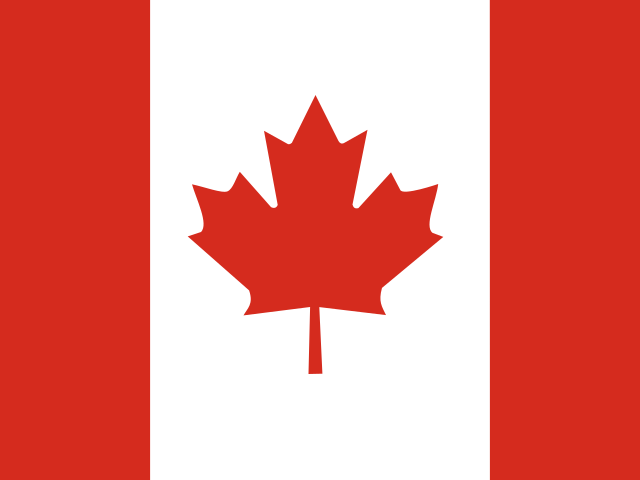
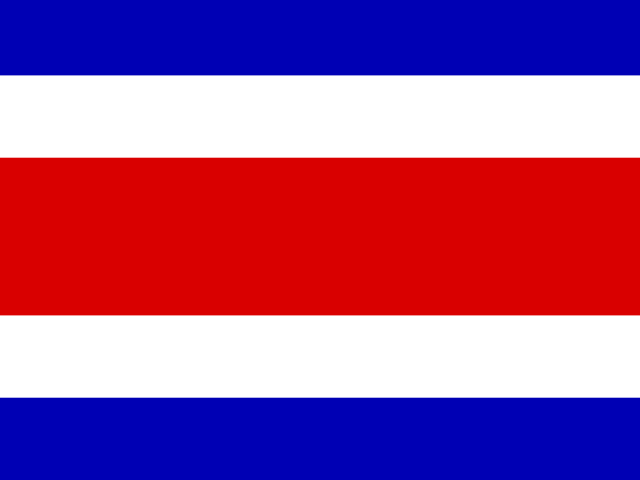
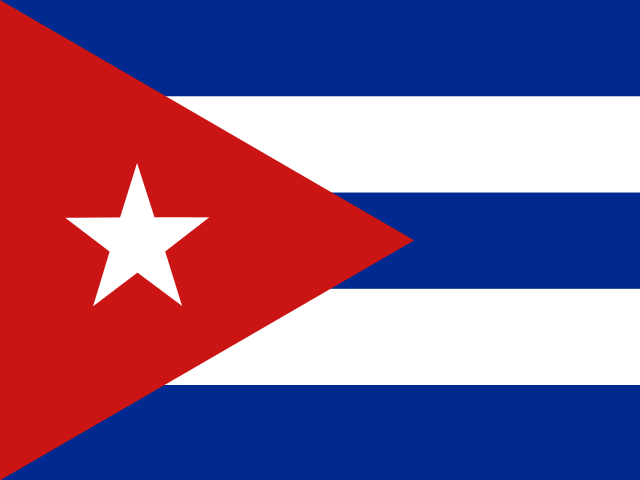
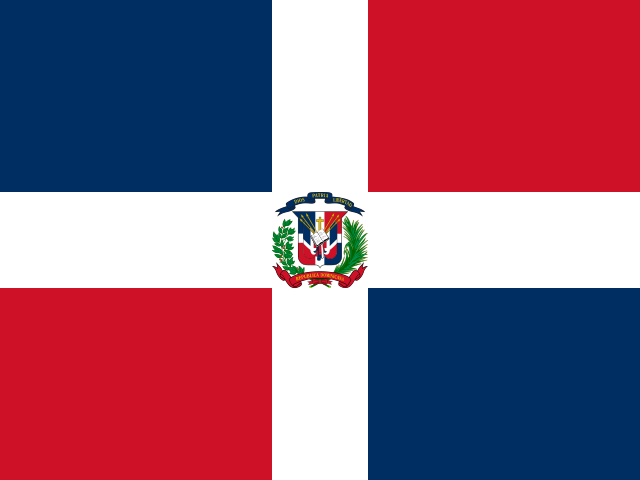
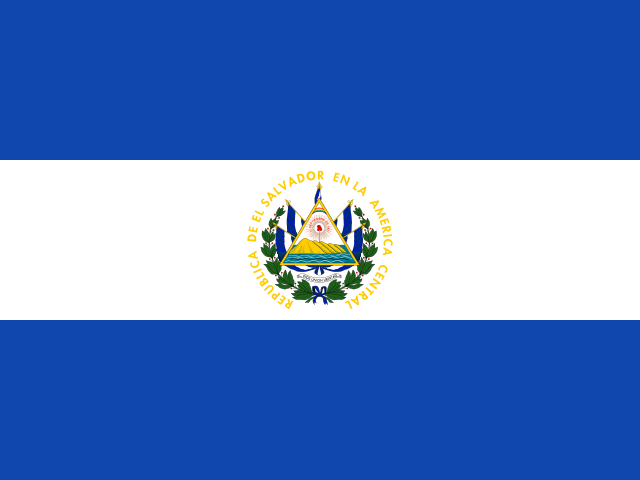
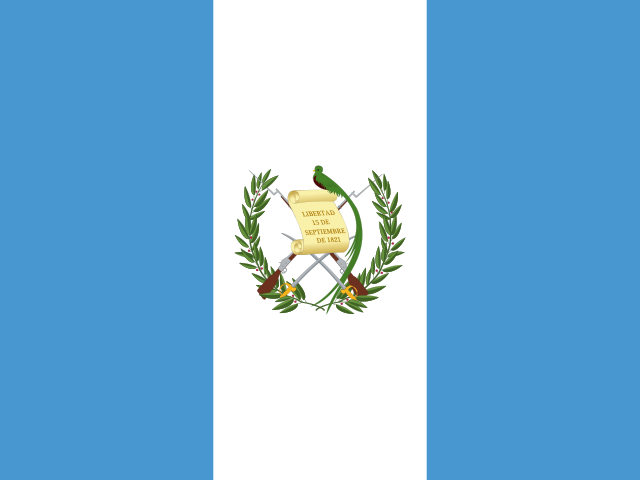
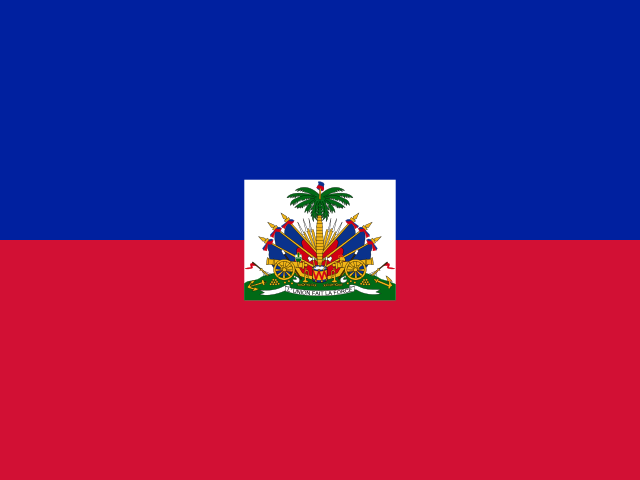
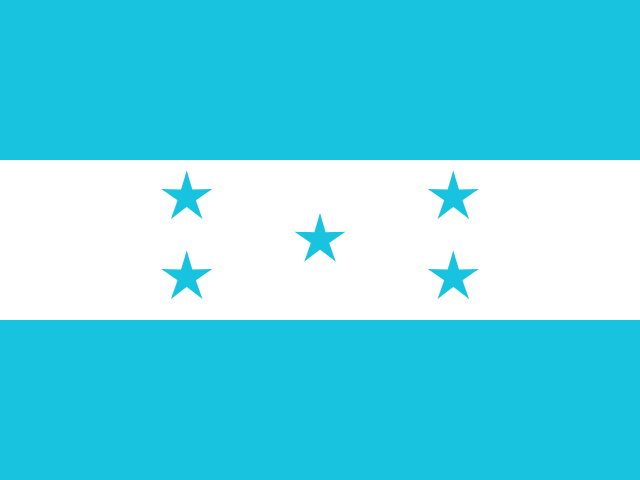
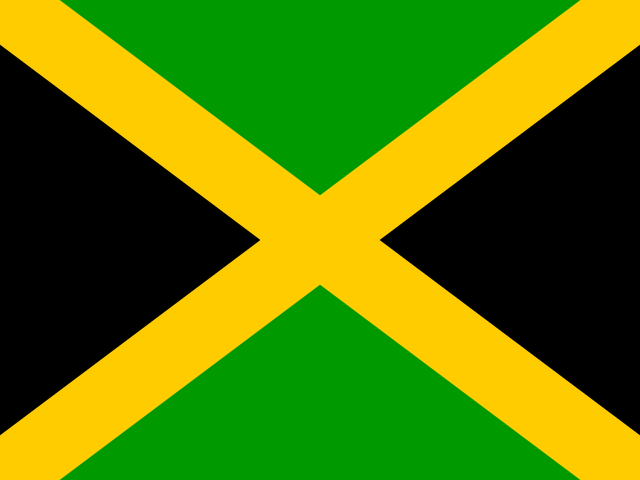
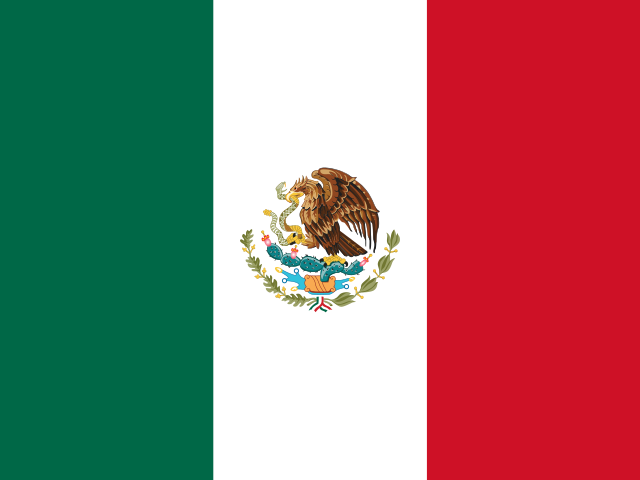
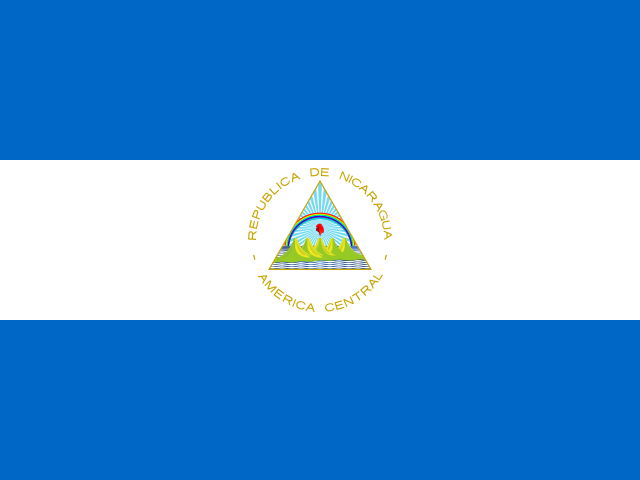
The dominant family is Central America's blue-white-blue pattern, used by Guatemala, Honduras, El Salvador, Nicaragua, and Costa Rica, with roots in the Federal Republic of Central America and its Pacific-Caribbean framing. A Caribbean sub-family uses triangles, stars, and sea colors on The Bahamas, Cuba, Saint Kitts and Nevis, and Trinidad and Tobago. Symbol-led flags include Canada's maple leaf, Mexico's eagle and serpent, Barbados's broken trident, Jamaica's gold saltire, and Dominica's sisserou parrot. The tightest sovereign-country near-miss is Honduras vs. Nicaragua: both use blue-white-blue with a center mark, but Honduras has five stars while Nicaragua has a coat of arms.
Who plays it For classrooms, homeschoolers, and culture students
Teachers and homeschool families use North American flags for social studies, Latin America, Caribbean culture, Hispanic Heritage Month, and independence-symbol units because designs connect history to visible details. Per-learner progress and reward goals make it easier to revisit look-alike flags until recognition is steady. Students use the page for Geography Bee, Model UN, Model OAS, AP Human Geography, and AP World History review. Sports fans watching CONCACAF, the Gold Cup, World Cup qualifiers, Olympic ceremonies, and vexillology practice fit naturally here too.
How to learn Sort by flag family, then drill near-misses
Sort into families first. Start with the Central American blue-white-blue cluster and drill Guatemala, Honduras, El Salvador, Nicaragua, and Costa Rica by center emblem, stripe order, and the red band on Costa Rica. The Caribbean triangle-and-star designs form a neat second bundle with The Bahamas, Cuba, Saint Kitts and Nevis, and Trinidad and Tobago. Symbol flags give satisfying wins: Canada, Mexico, Barbados, and Jamaica. Finish with confusion-pair drills: Honduras vs. Nicaragua by stars versus coat of arms, then Cuba vs. Puerto Rico by inverted triangle colors.